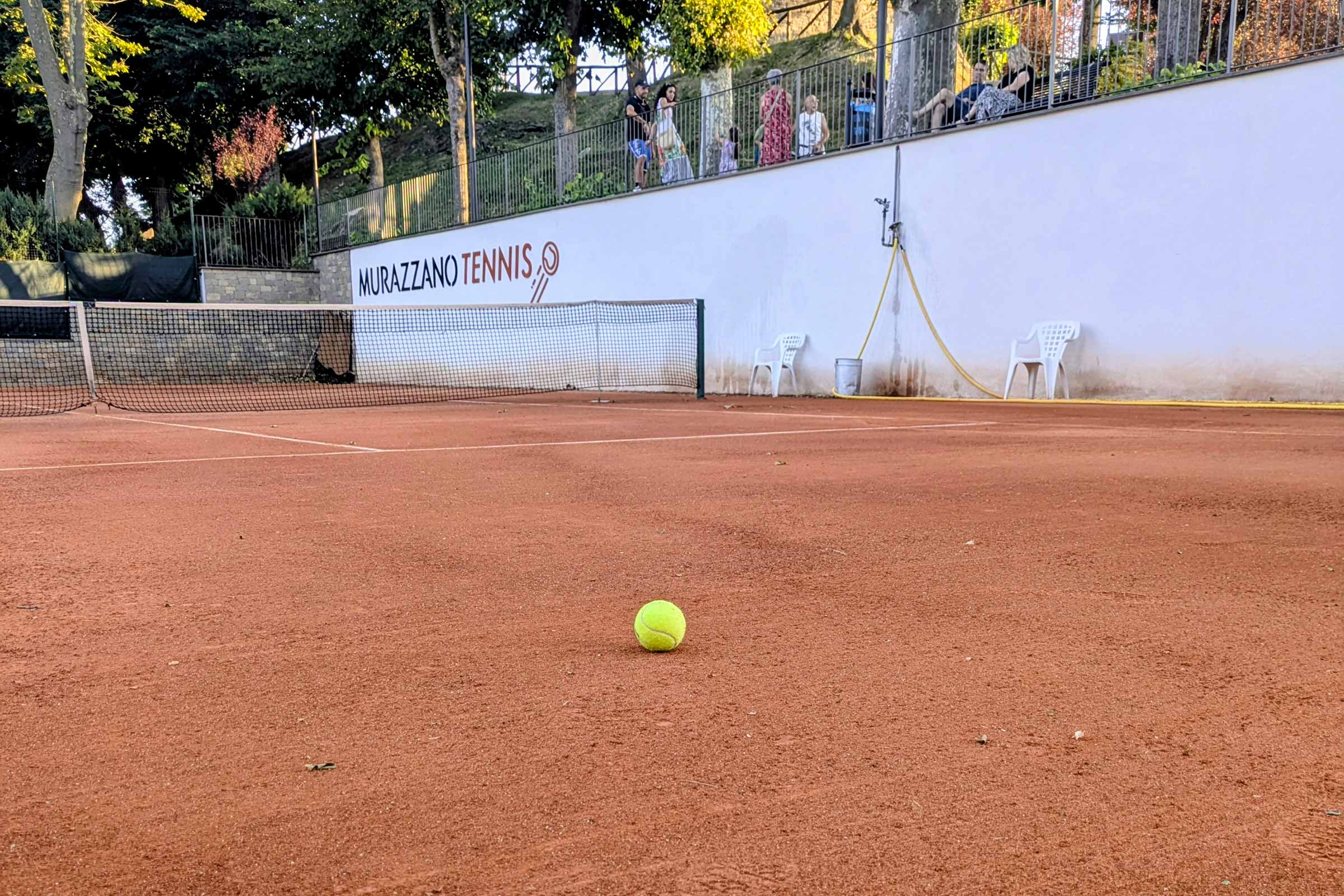
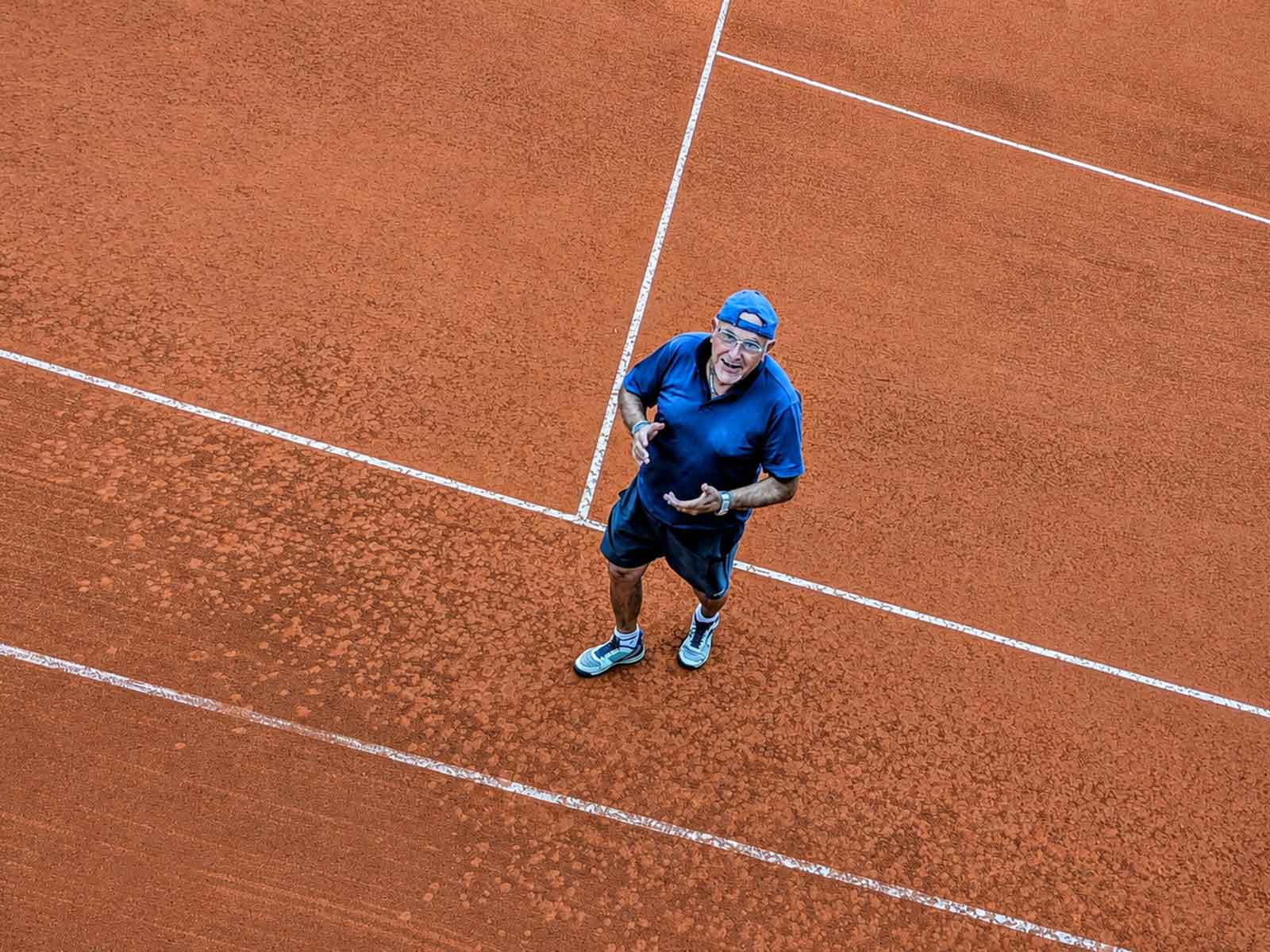
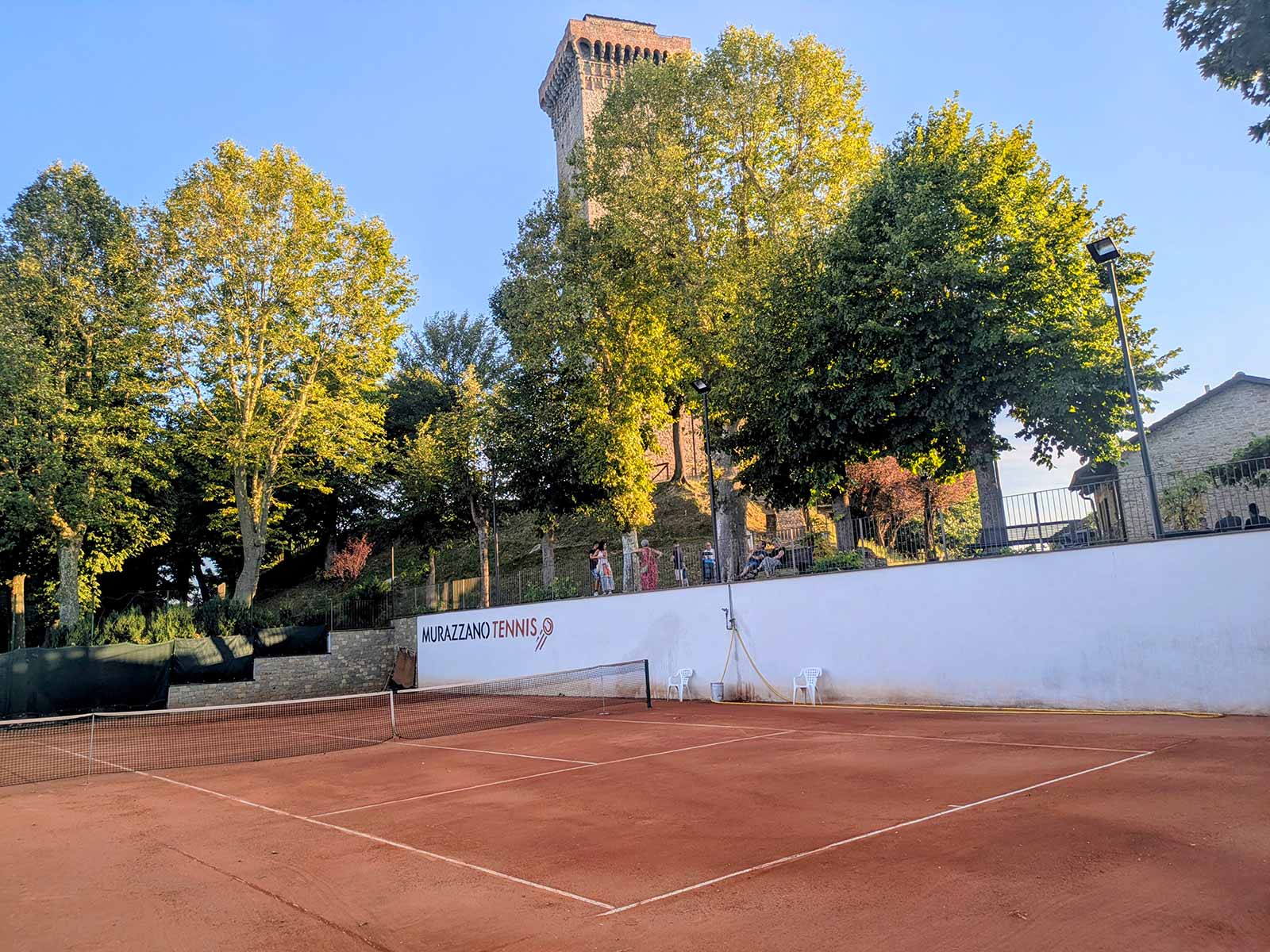
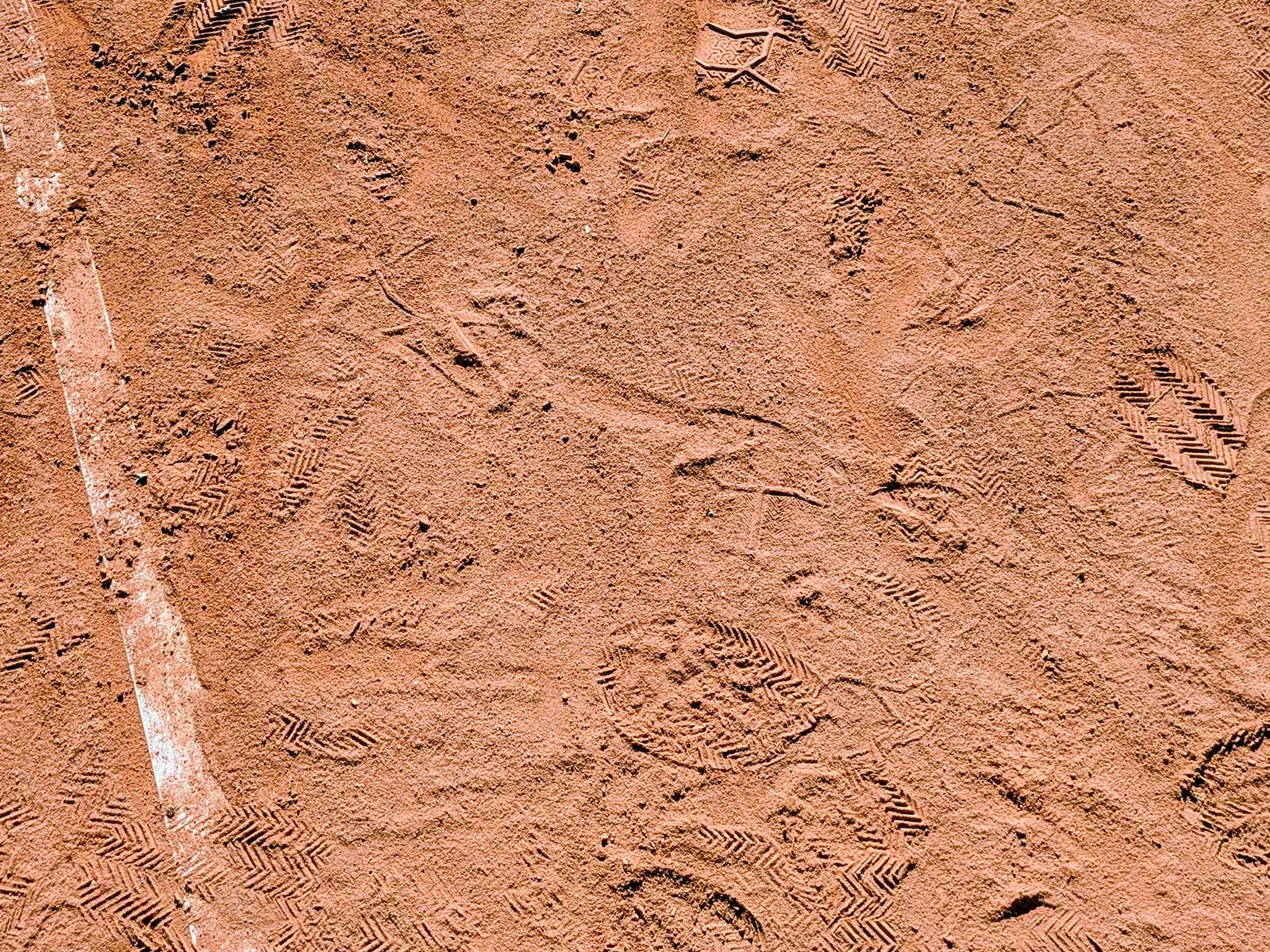
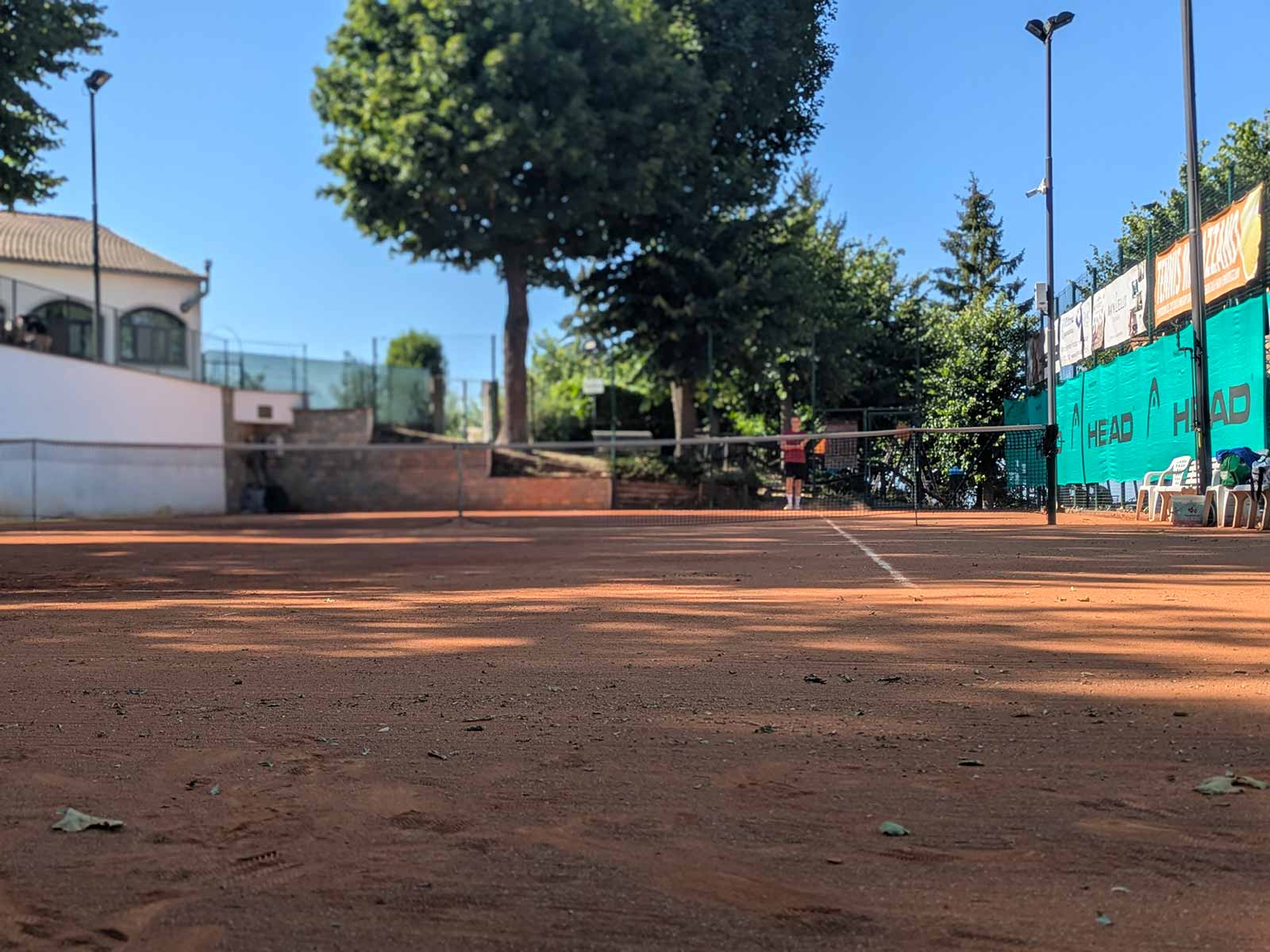
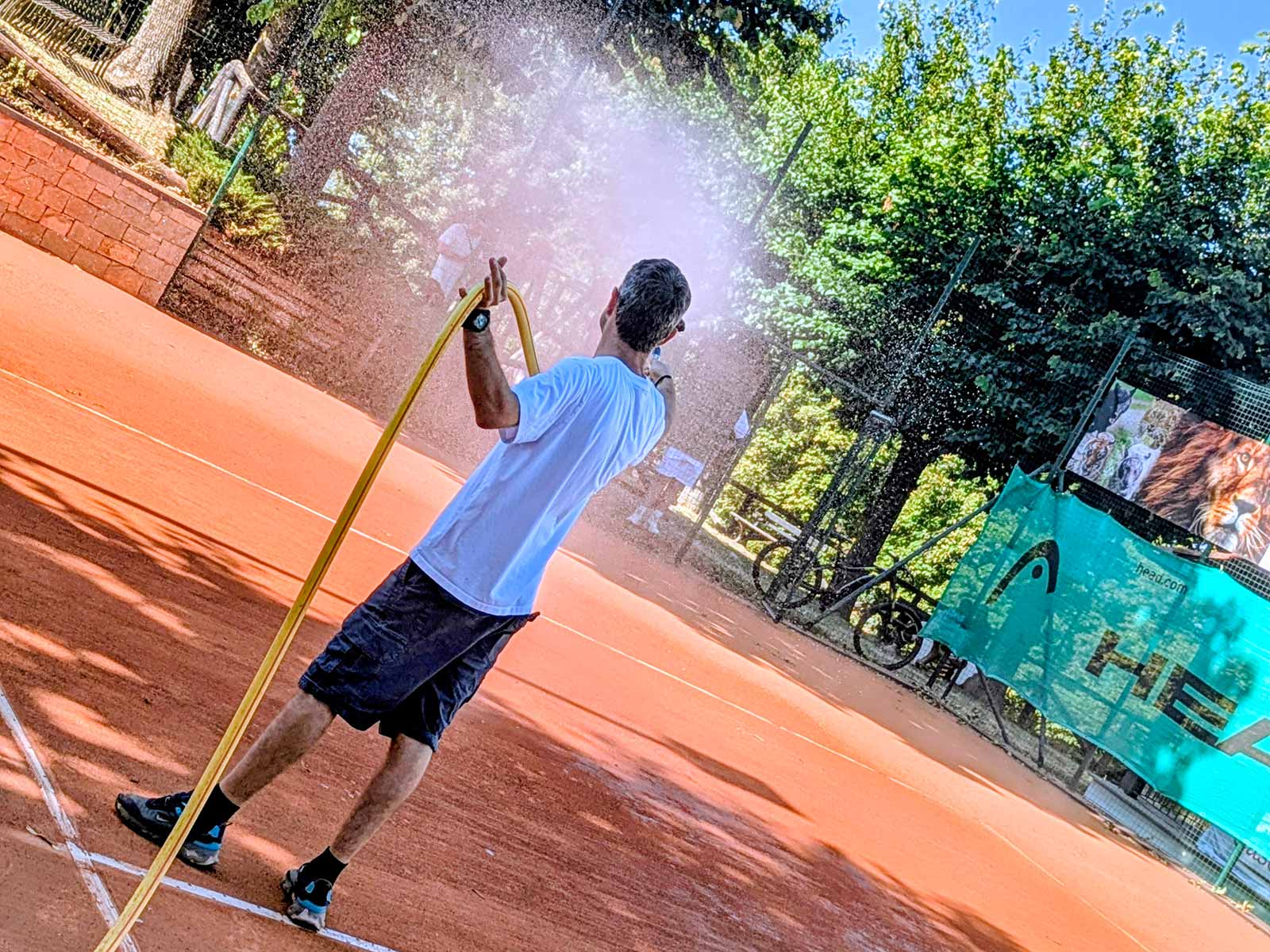
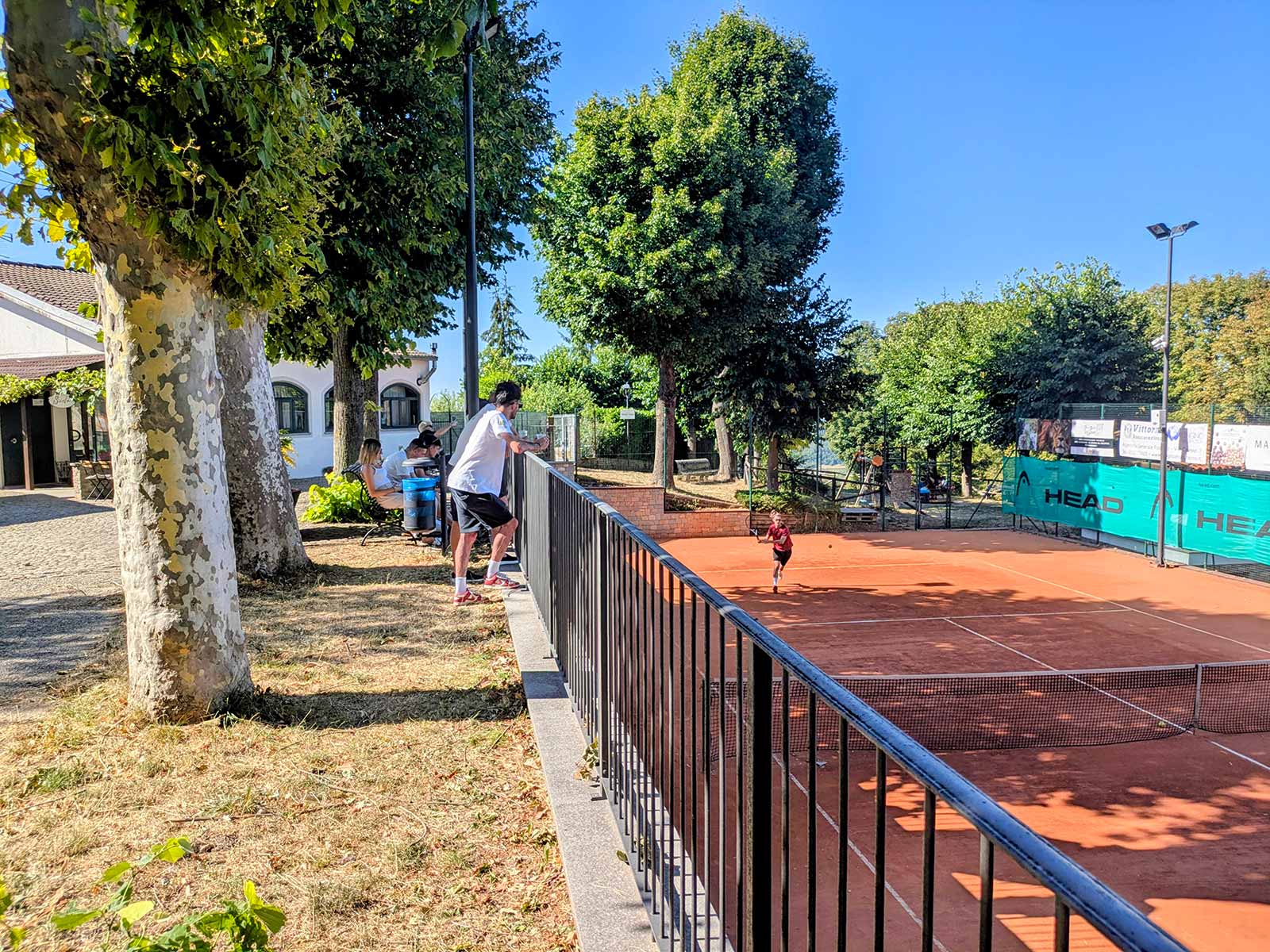
With Walter Pagliano, time passes without hurry. First a coffee at Bar Gianduja, then a bench beside the now empty court. When the last voices have faded and only a few footprints remain on the red clay, it is the best moment to talk. Since Walter arrived in Murazzano, this court has also accompanied his life. He has taken care of it since 1991, with a few pauses, but always returning here. I ask him how he understands when the court is ready. Walter smiles.
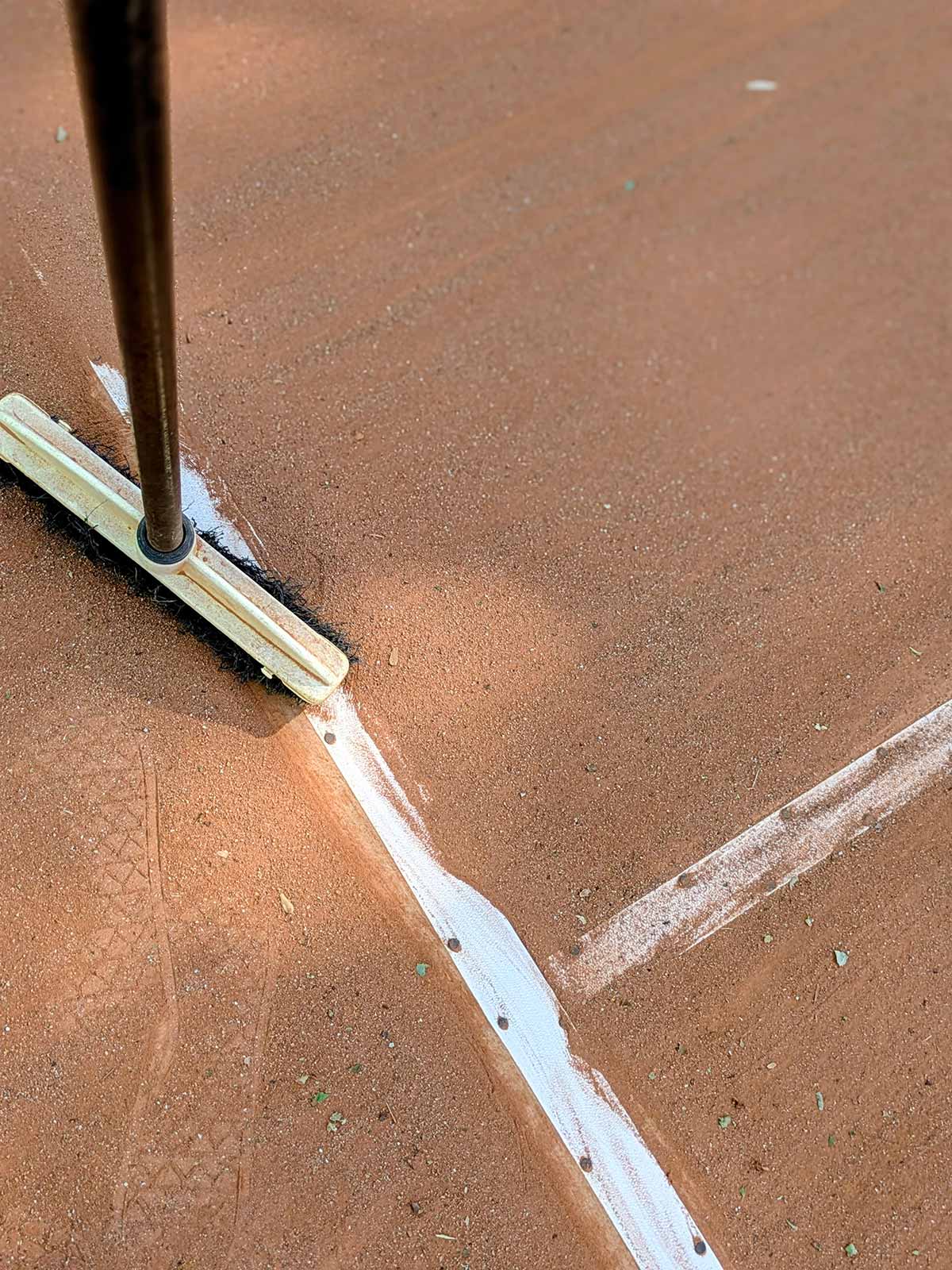
I look at it. I walk on it. If it is too dry or too wet, I see it and I feel it. He does not use instruments. He does not measure the humidity. He steps onto the court, takes a few steps and listens to what the red clay gives back to him. After so many years, the court itself tells him what it needs. In the evening he passes slowly with the drag net, erasing one by one the footprints left by the players. The next morning, new ones will arrive. I ask him whether he prefers that moment of silence or the times when the court is full of people. He thinks for only an instant.
I like both. But I especially like the court when it is being used. Even if that means staying here late. If a match ends at half past midnight, that is fine. Before saying goodbye, I ask him one last question. If this court could speak, what would it tell? Walter lowers his gaze toward the red clay.
Ha visto milioni di persone, milioni di bellissime partite. E anche tante romanze. Per me questo campo è come un figlio.