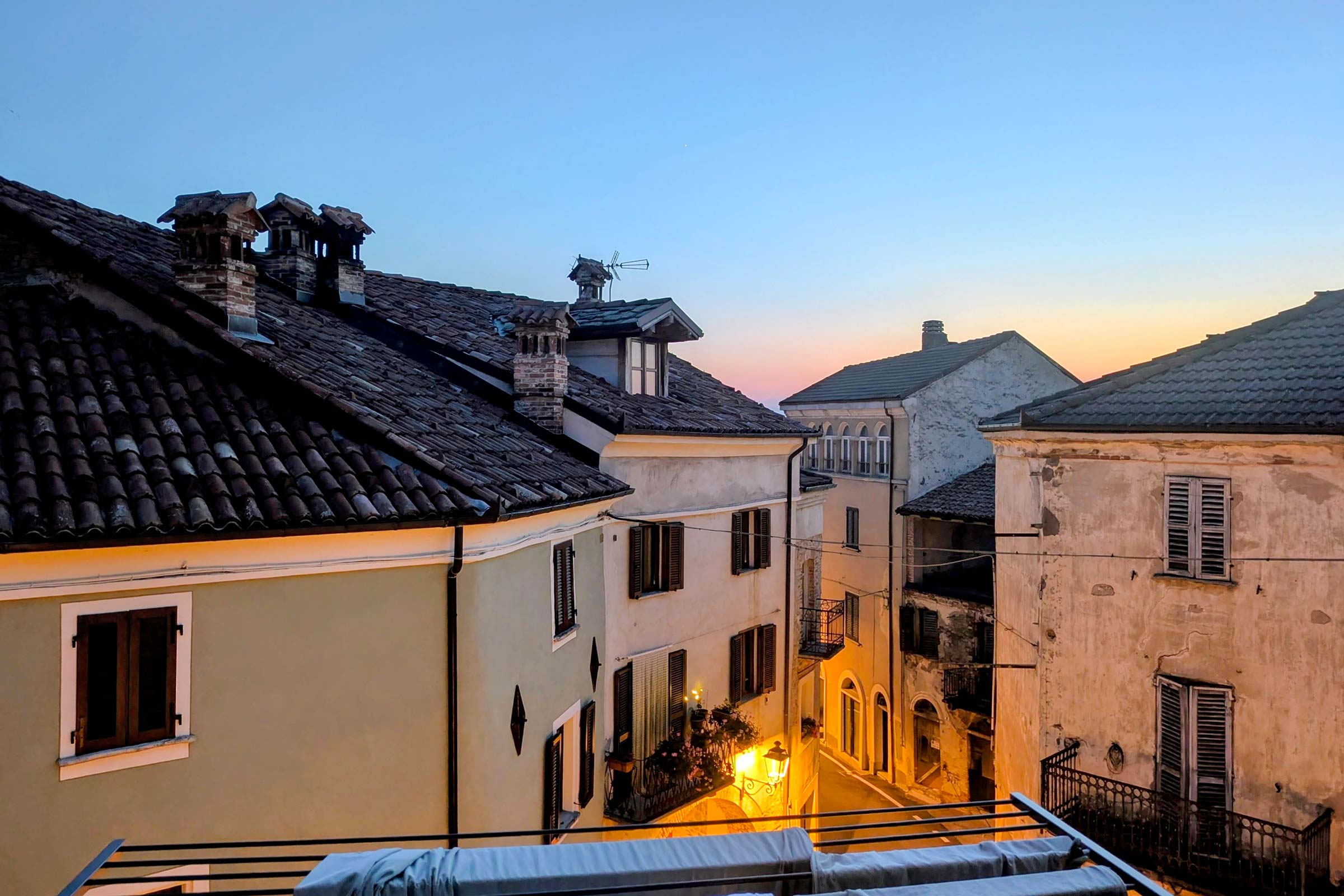
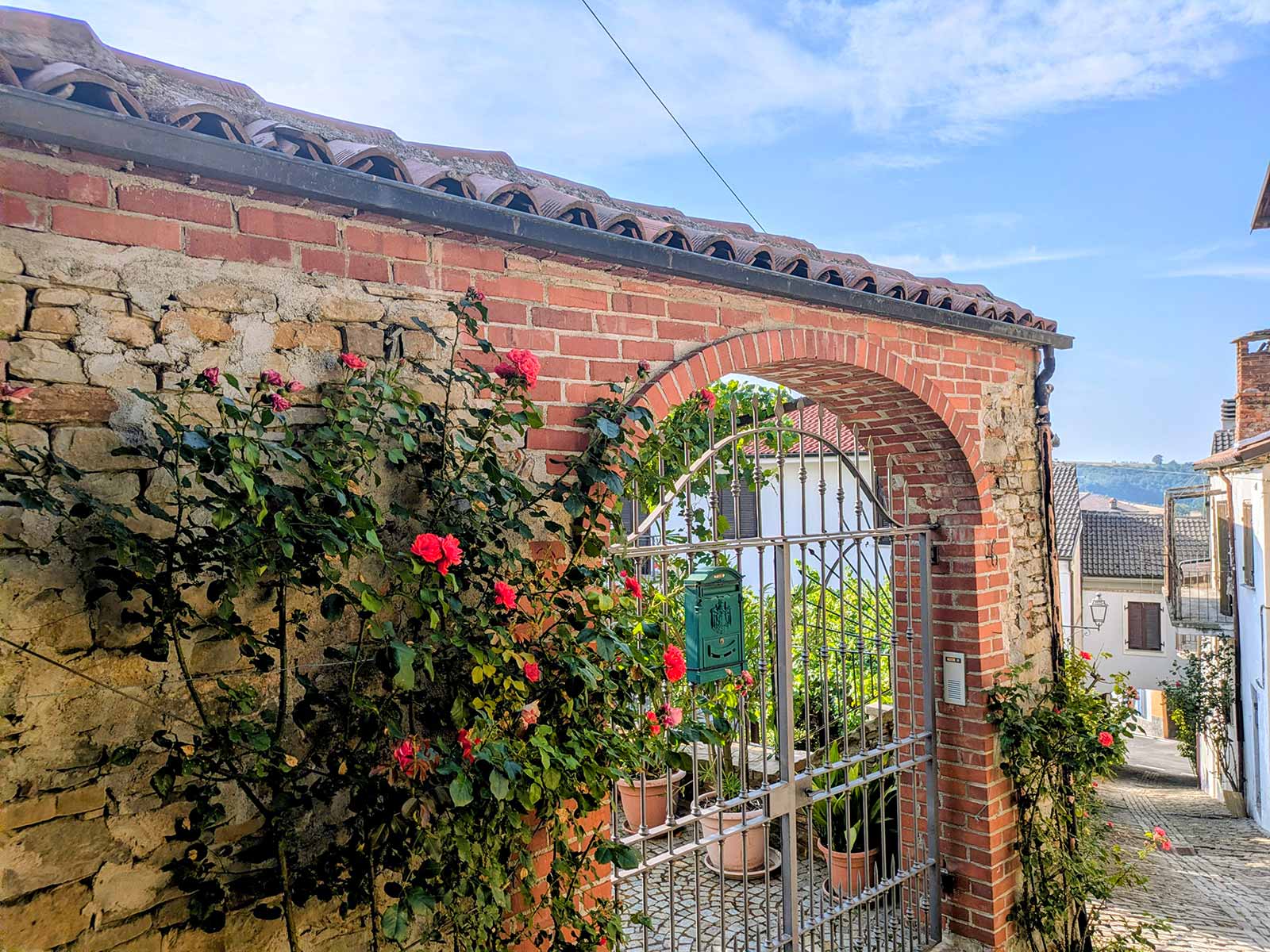
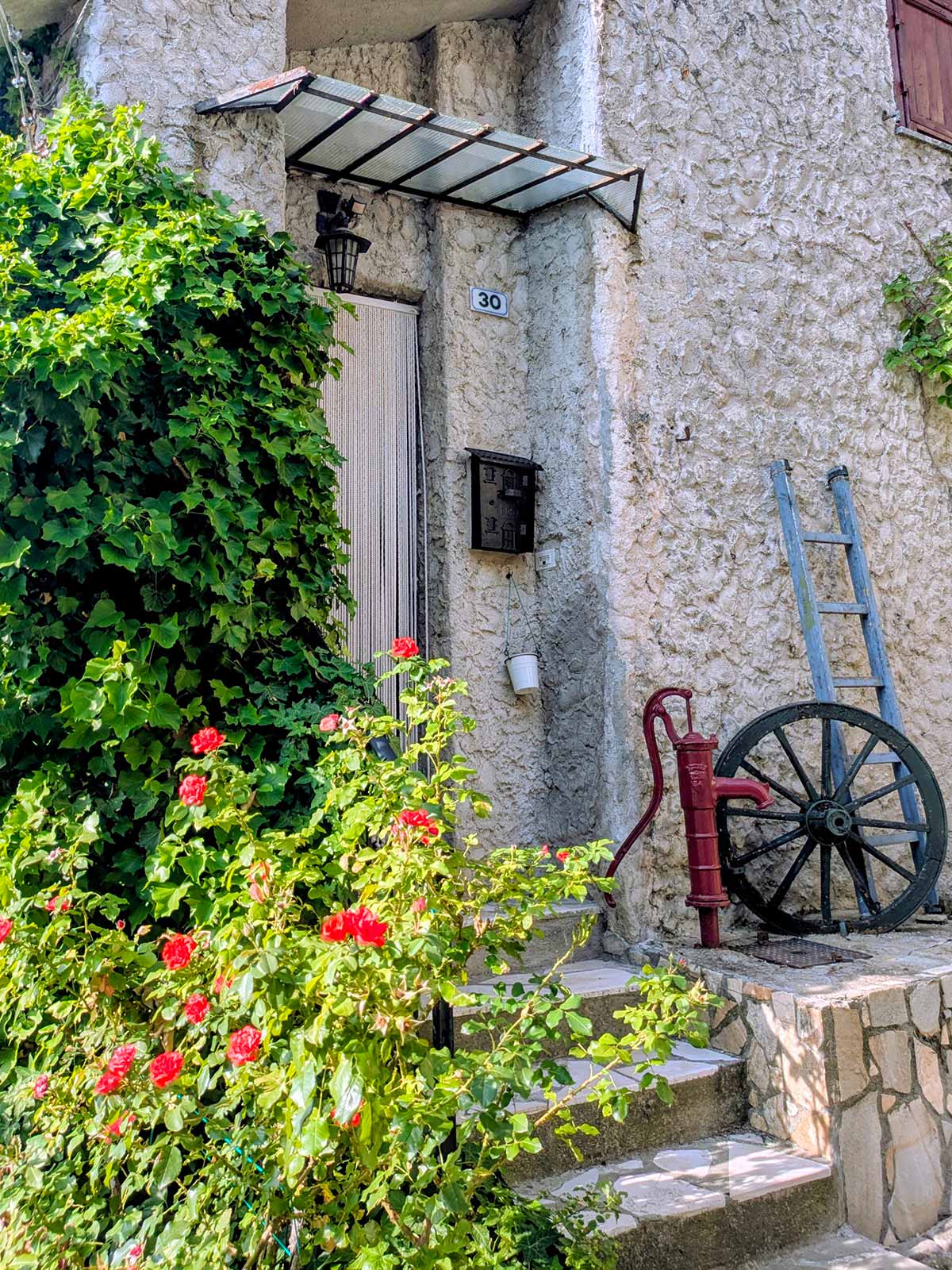
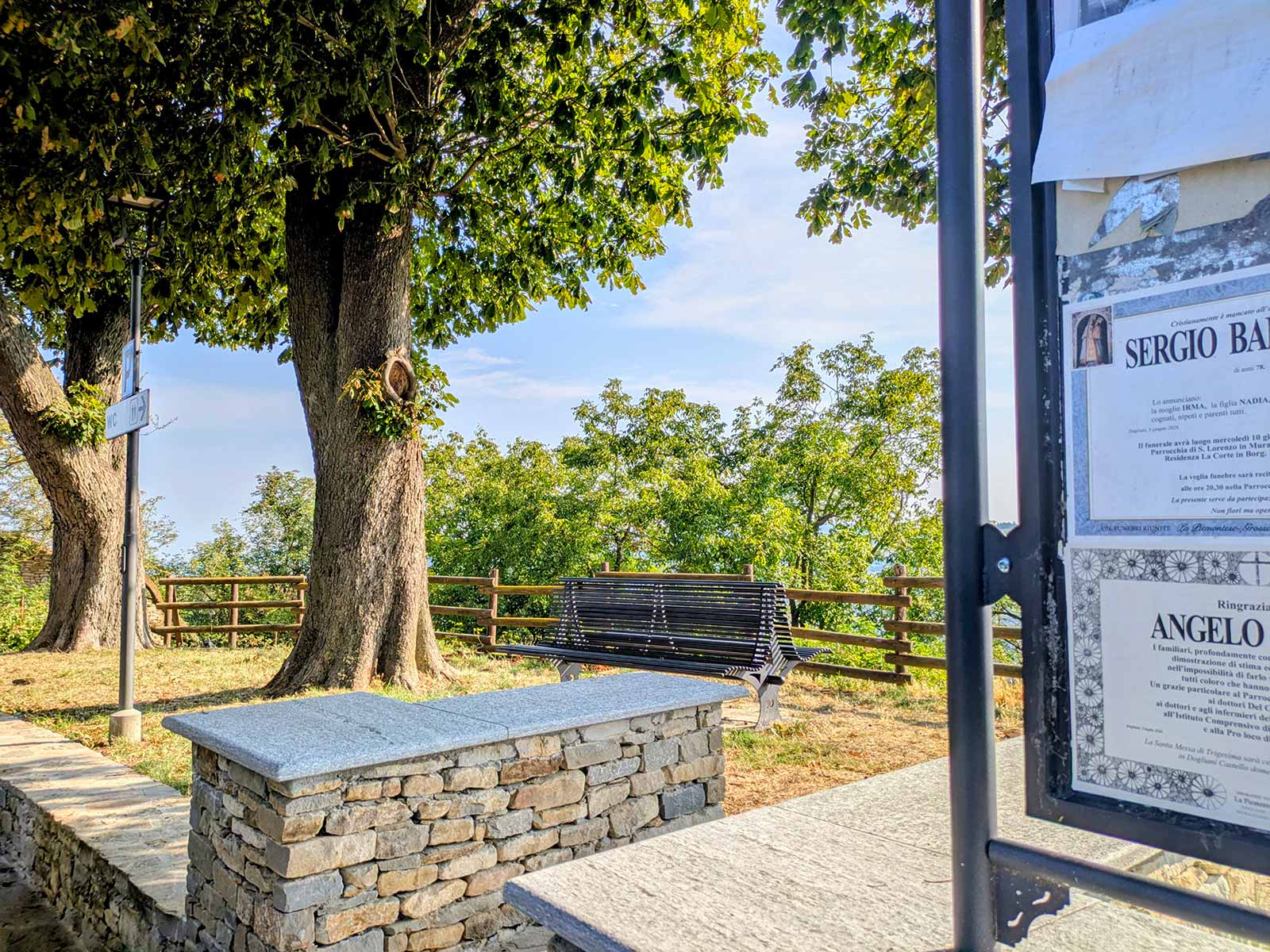
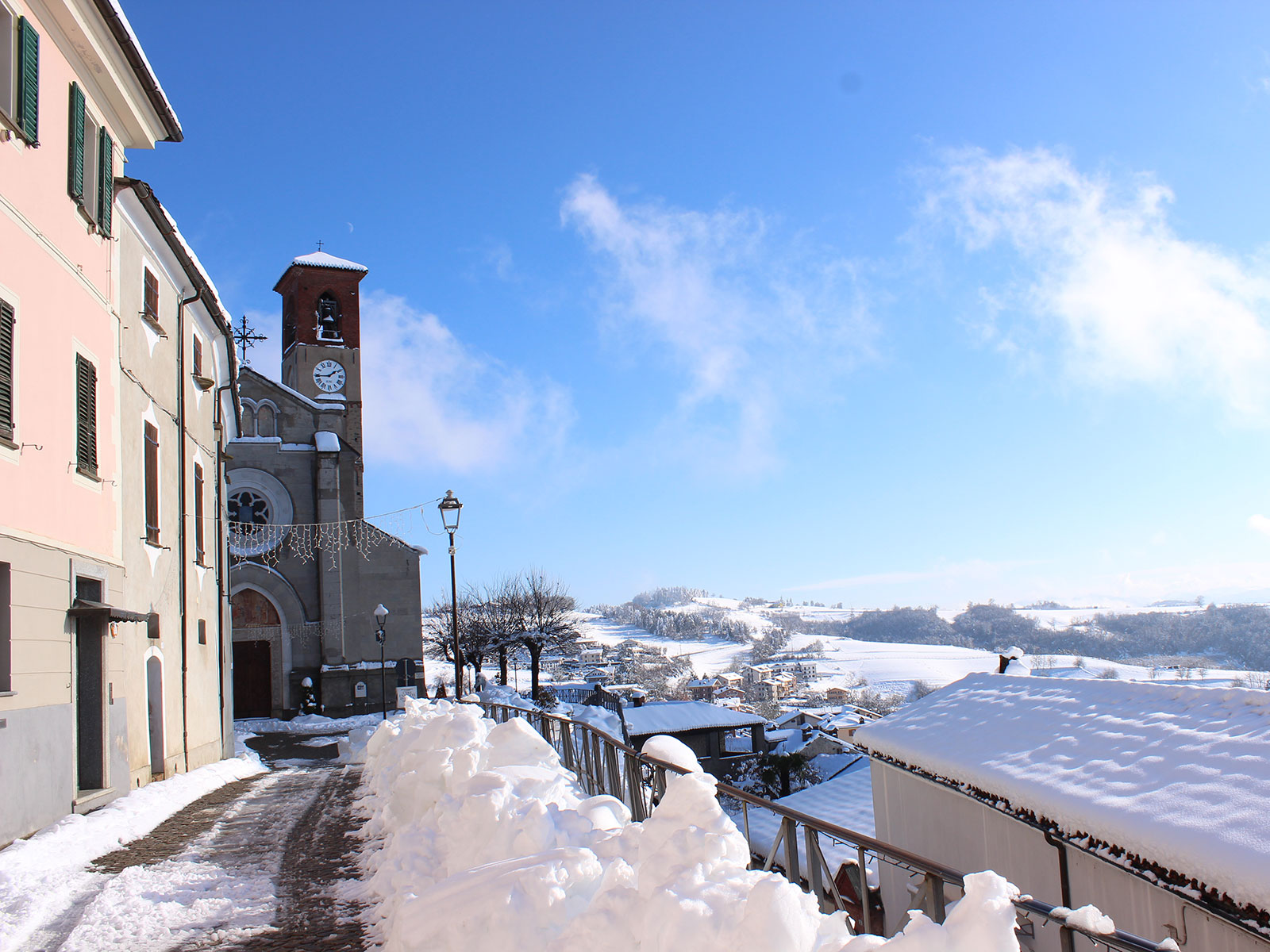
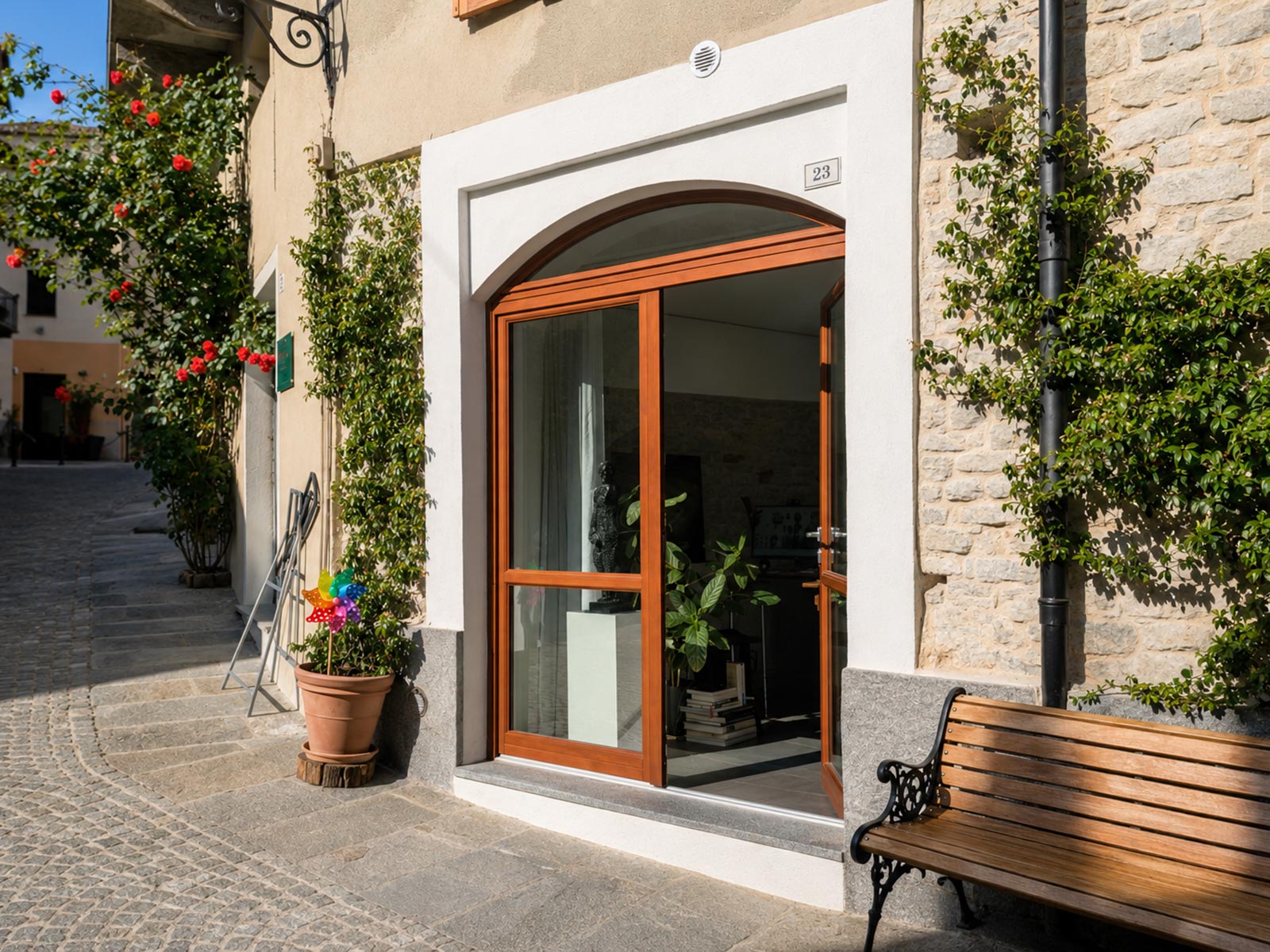
Anyone approaching Murazzano can see the village from far away.
A tower rises above the hill. Beneath it, the houses gather closely together. Of the former castle, only this tower remains, watching over the village since the 13th century. Because of its position 749 metres above sea level, Murazzano was once called “scudo e chiave del Piemonte”: the shield and key of Piedmont. When you see Murazzano from afar, you understand why.
When we first arrived here in 2011, we knew very little about Piedmont. And yet we had been drinking the wine of this region in Germany for many years. Murazzano was simply a name on a map and a holiday apartment in the small frazione of Lovera.
We would never have believed that one day it would become our home.
What struck us first was not the tower. It was the quiet. The feeling that time passes more slowly here. Fifteen years later, many things are still in their place. The piazza. The café. The osterias. The narrow lanes. Murazzano changes, but never in haste.
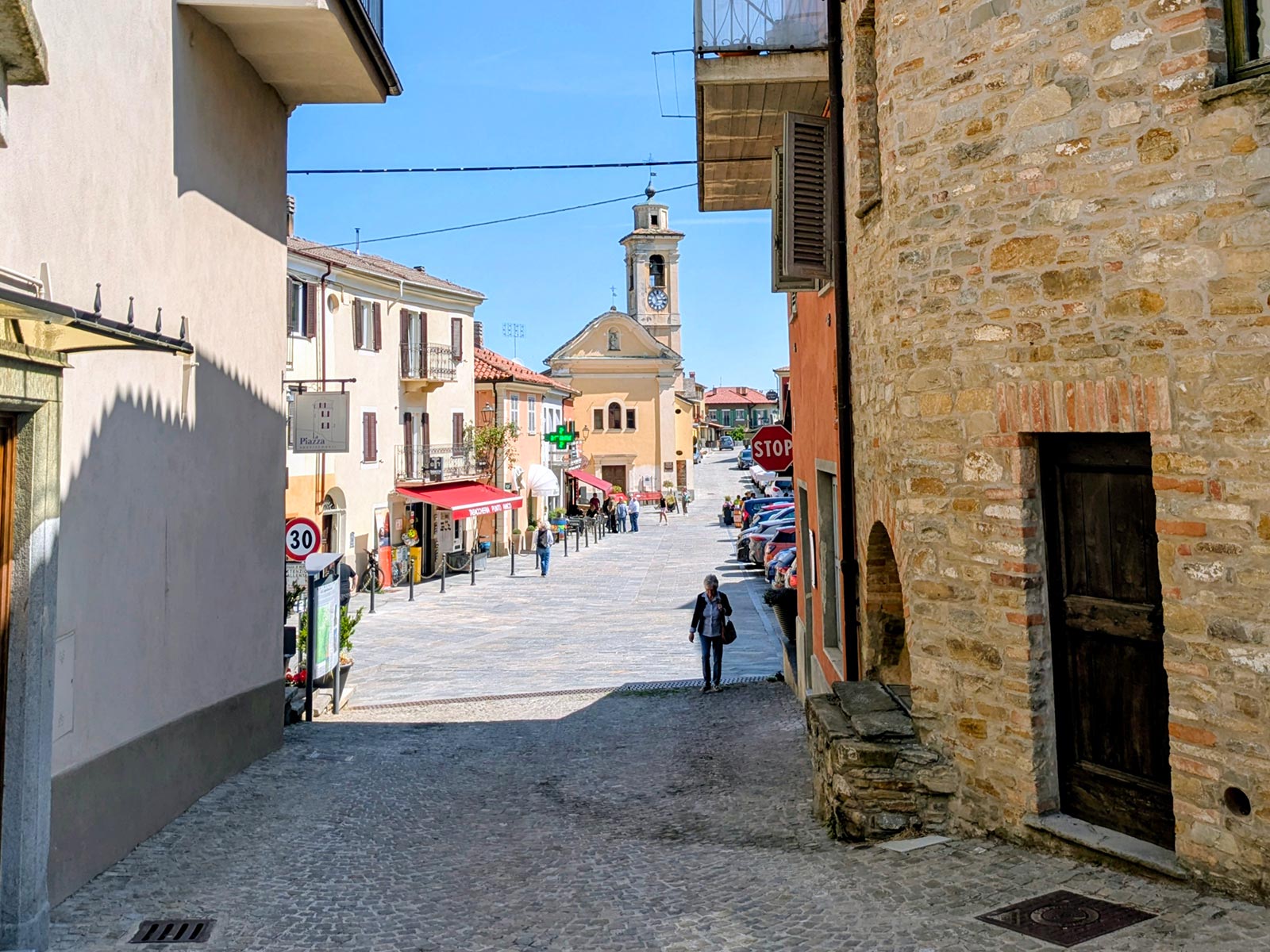
The heart of the village is the piazza.
In the morning, the sun falls at an angle between the houses. Before many shops have opened, craftsmen and workers meet for a quick coffee. People talk about the weather, football, cars and, of course, food. Politics seems less important here than what will be on the table today.
Around midday, the osterias fill up. People from the surrounding villages come to Murazzano for lunch. Those who have time stay for an espresso.
In the evening, aperitivo begins. Some sit outside the bar, others near the pastry shop at the entrance to the village. Conversations circle around the day, around familiar faces and around the village. Work is rarely the subject here.
Those who come to Murazzano more often soon notice that almost everything happens within a few metres.
On the way to the baker, you greet everyone you meet.
“Ciao.”
A few steps further on.
“Ciao.”
Once again.
“Ciao.”
And on the way back, it all begins again.
In front of the Gianduja, the same men often sit in the morning with their backs against the wall. They do not watch curiously, but attentively. They know who is arriving, who is leaving and who is missing today. Eventually, you begin to recognise the familiar faces yourself.
Our paths lead almost every day out of the village towards Lovera.
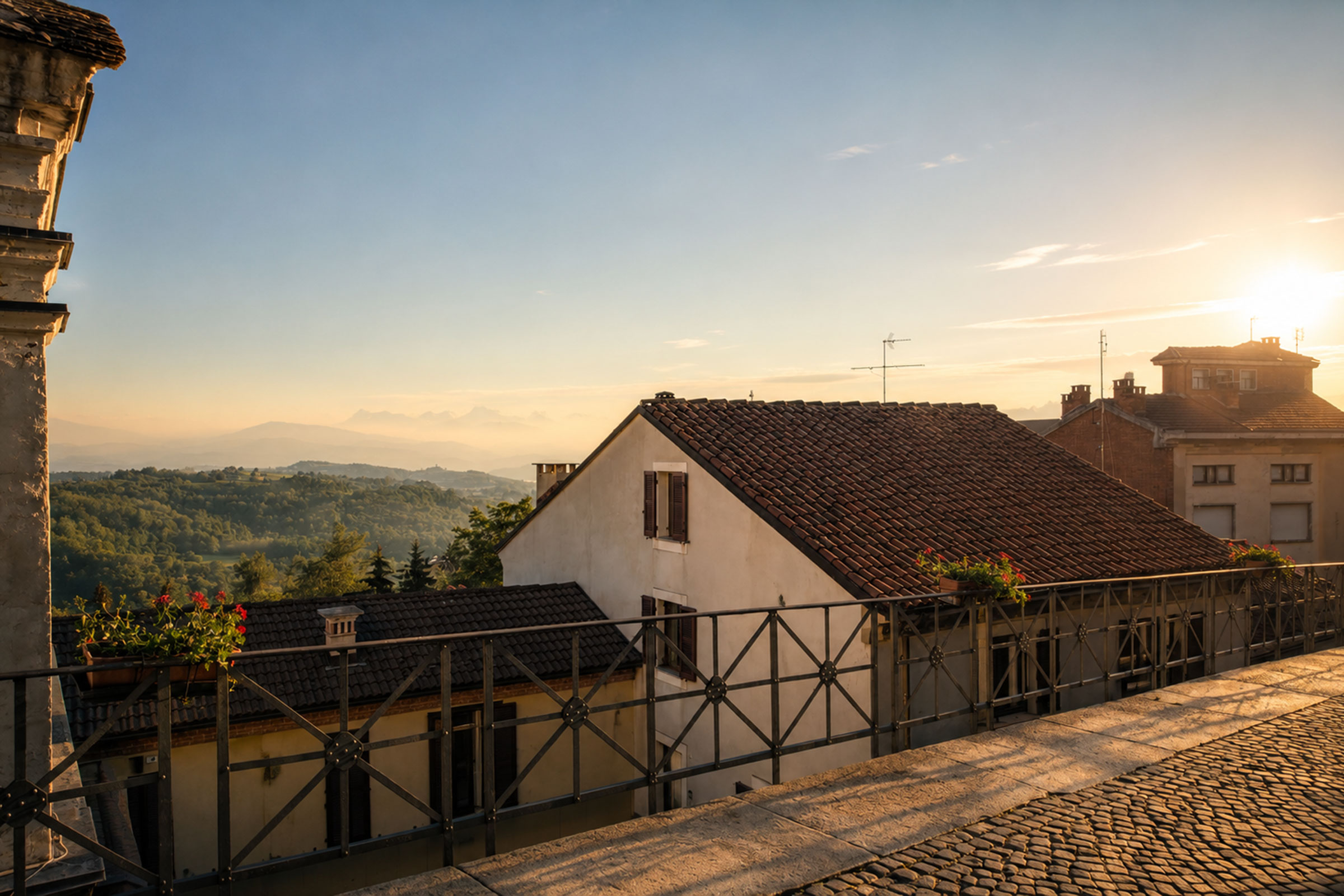
The road is about three kilometres long. It once took us from the holiday apartment to Murazzano. Today we still walk it almost daily. To the left, the hills of Alta Langa open out, beyond them the Po Valley and, on clear days, the Alps. The most beautiful moment is in the evening, when the sun slowly disappears behind Monviso.
The small grocery shop is also part of Murazzano for us.
Romina and Sabrina bake their own bread. The oven is on the other side of the piazza. Anyone out early can smell the fresh bread around five in the morning, before the village has properly woken up.
Murazzano changes with the seasons.
In spring, things are painted, repaired and prepared.
In summer, the village lives outdoors. Despite the warm days, the altitude almost always brings a breeze. In July and August, one festival follows another. As August moves on, people in the village smile and say: “Now it is getting cold.” And indeed, from then on, the evenings slowly become cooler.
In August, the hazelnuts are gathered. The grape harvest follows from August to October. The hills turn warm colours, and everywhere people are working.
In winter, Murazzano smells of wood smoke. Fog can wrap the village for days, until suddenly snow falls. It often does not stay long. But on the mountains towards Liguria, the peaks shine white.
You can also hear Murazzano.
Three church towers ring their bells slightly out of step, so that each keeps its own sound.
Friday morning announces itself early. Around six o'clock, the market vans make their way through the narrow Via Roma. Anyone who has forgotten their car in the piazza is reminded kindly, but firmly.
And above everything lies the clinking of cups from the bar.
Recently we were in Germany for a few days.
On the fourth day my wife said quite naturally:
“Tomorrow we are going home.”
We looked at each other for a moment.
Germany used to be our home, and Murazzano was the holiday.
At some point that had changed.
Without us being able to say exactly when.
Stories from Murazzano
Everything told about this place gathers here. Murazzano begins with stories from the piazza, the lanes, a house in the historic centre and places at the edge of the village.